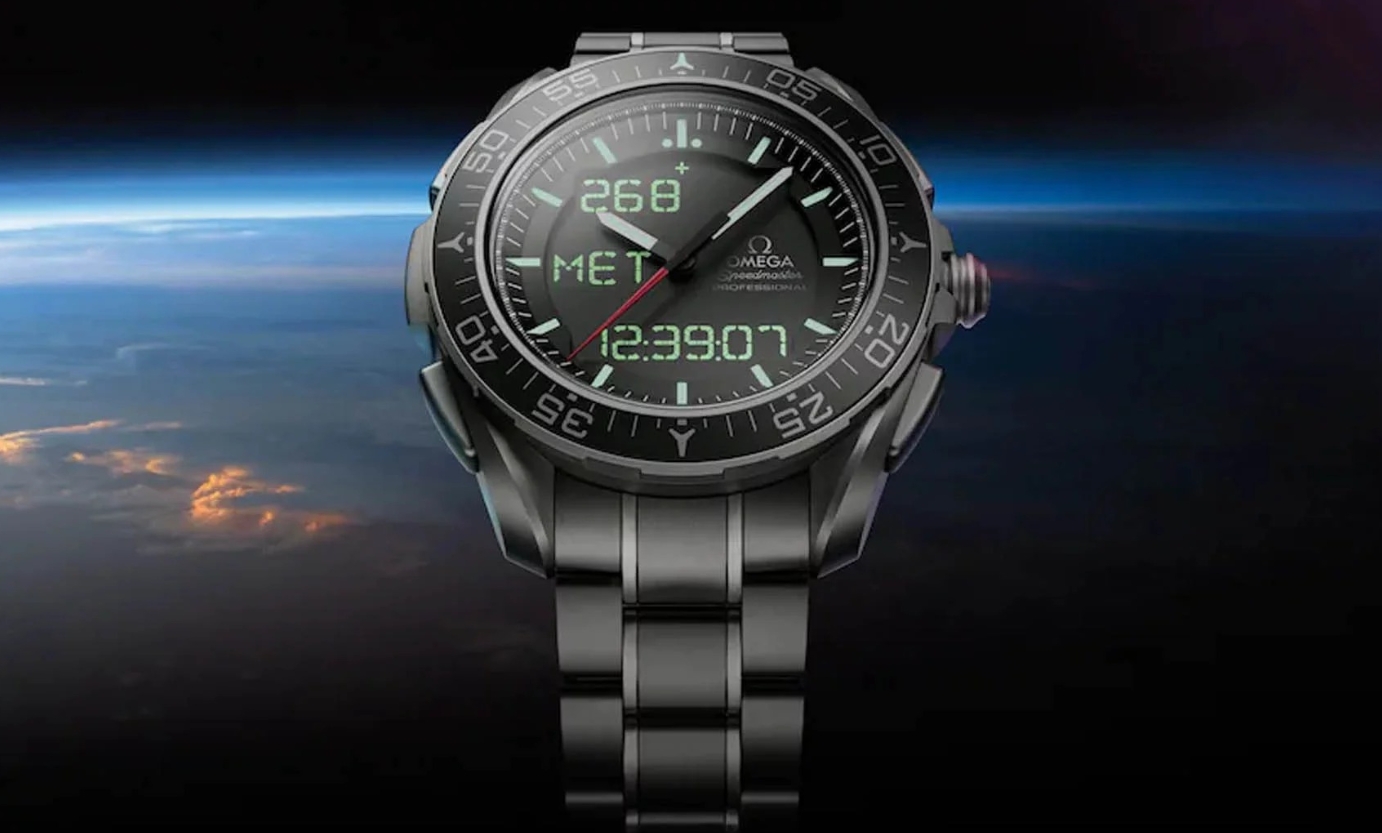
Omega Speedmaster X33 Replica Design and Digital Functions in the UK
Some watches become easier to understand once they disappear from a catalogue. The Omega Speedmaster X33 is one of them. While it was available, it could look like the unusual digital member of the Speedmaster family. With the Skywalker and Marstimer no longer part of Omega’s public range, its purpose stands out more clearly. This was never a conventional chronograph with a screen added for effect. It was developed as a lightweight timing instrument for people working around spacecraft, mission schedules and several forms of elapsed time.
That background also makes the X33 a demanding subject for a replica watches UK publication. Its identity is spread across the titanium case, analogue hands, LCD display, pushers, acoustic alerts and the way its functions are organised. Copying the broad outline is relatively straightforward. Reproducing the character of the watch is much harder. A replica should therefore be judged on what it actually does and how it is built, not on specifications borrowed from the original Omega.
A Speedmaster designed around a job
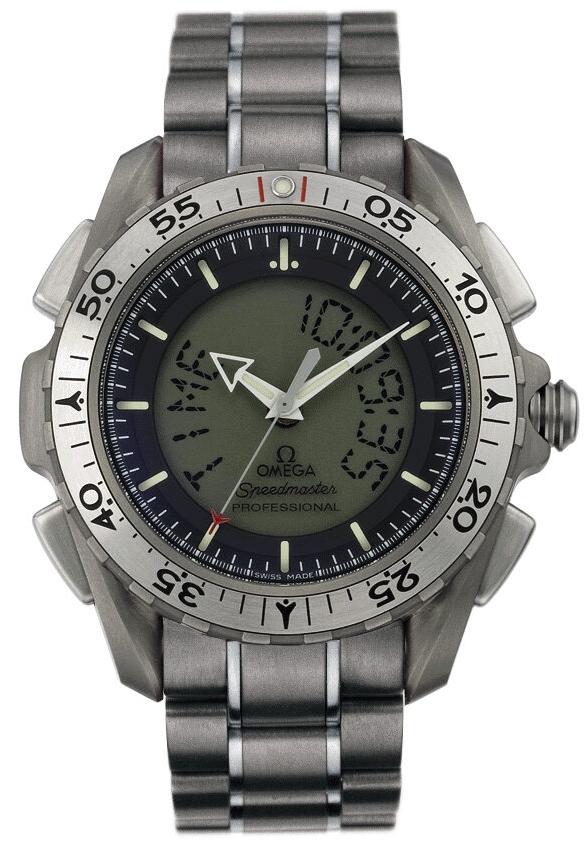
Omega released the first public Speedmaster X33 in 1998 after developing the concept with advice from astronauts and pilots, including General Thomas Stafford. The result combined conventional hands with a digital display beneath them. Local time remained immediately visible, while the electronic module handled alarms, countdowns, a chronograph, additional time zones and mission elapsed time. It looked futuristic, but the arrangement was based on practical requirements rather than science-fiction styling.
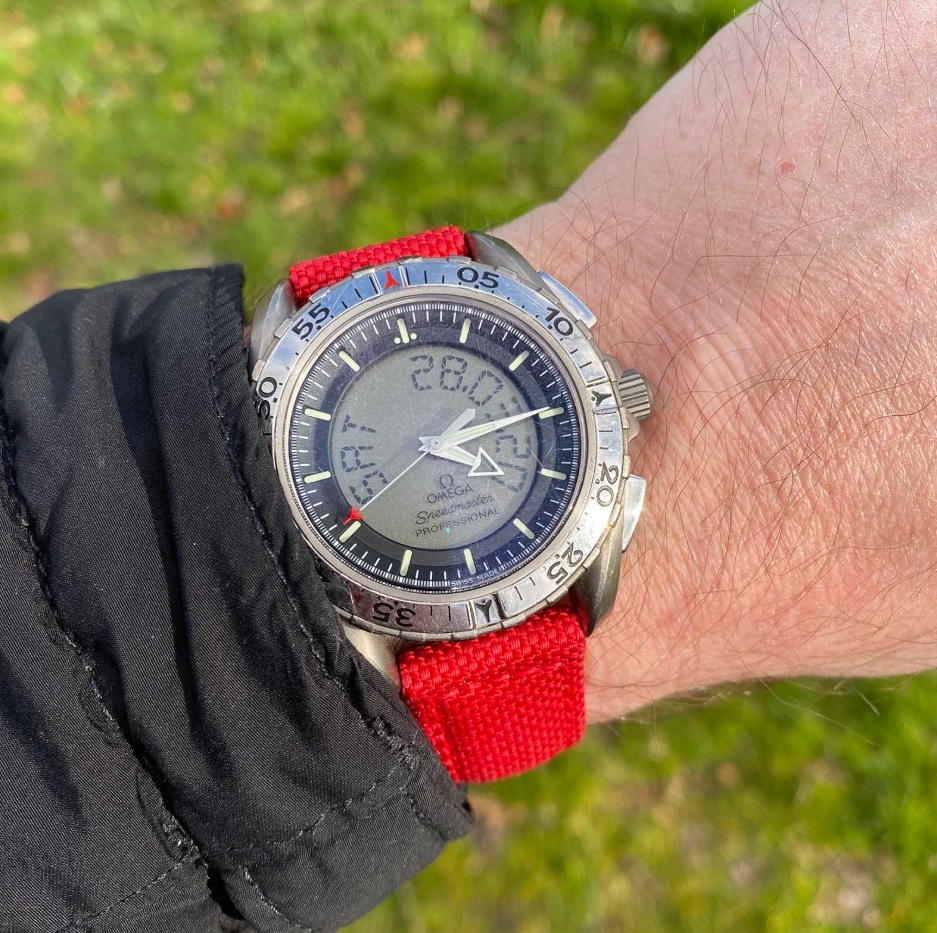
The first and second generations established the shape most collectors still associate with the X33: a wide titanium case, four clearly separated pushers, a dark dial and a rotating bezel surrounding the analogue-digital display. The second generation refined the electronics and became particularly closely connected with NASA. Watches from this generation continued to appear on astronauts long after normal public sales had ended, showing that professional issue and retail availability can follow very different timelines.
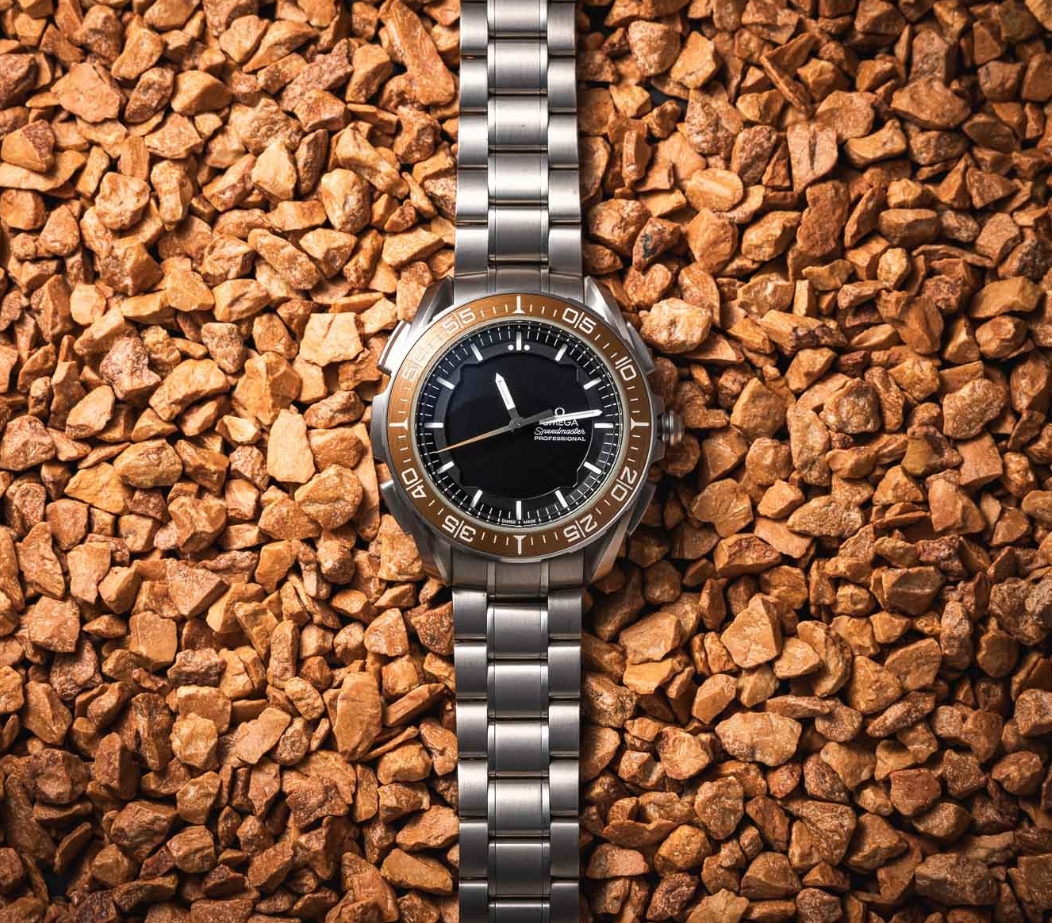
The Skywalker moved the design forward with a 45mm titanium case, ceramic bezel and darker negative LCD. It felt cleaner and more modern than the earlier watches, although the low-contrast display divided opinion. The Marstimer arrived in 2022 with red and black details and a more specialised purpose. Developed with the European Space Agency, it could show both Earth and Mars time and help teams working to the rhythm of a Martian solar day, which lasts roughly 24 hours and 39 minutes.
That distinction matters. The Marstimer was not designed simply to look appropriate beside a Mars rover. Its functions were intended to help mission teams on Earth coordinate work taking place on another planet. The model could also help identify true north without depending on an ordinary magnetic compass. Those features gave the watch a genuine technical story, but they also made it a niche product for the wider public.
For anyone examining a replica Omega Speedmaster X33 UK model, the first question should be which generation it is trying to reproduce. A first-generation X33, a NASA-associated second generation, a Skywalker and a Marstimer do not share every exterior detail. Their bezels, pushers, crown treatments, displays and colour accents differ. A watch that mixes elements from several versions may still look attractive, but it should not be described as an accurate interpretation of one reference.

Where an X33 replica succeeds or fails
Case material changes the experience more than photographs suggest. The original X33 uses titanium to keep a large watch surprisingly light on the wrist. Steel can reproduce a similar grey appearance, but it normally adds noticeable weight. A coated case may look convincing under studio lighting without feeling anything like titanium in daily use. Buyers considering a titanium style Omega Speedmaster replica should ask for the stated material, overall weight, case diameter and thickness rather than relying on colour alone.
The dial demands even closer attention because it is both analogue and digital. The hands should remain legible without making the LCD difficult to use. On some electronic watches, the hands can be moved temporarily when they cover important information; if a replica offers this feature, the seller should be able to demonstrate it. The digital segments should appear sharp, evenly illuminated and correctly centred beneath the printed dial. Small alignment errors become obvious because the LCD creates straight horizontal reference lines.
An Omega X33 analogue digital replica also needs controls that make sense. Four prominent pushers create an expectation that each one has a defined role. Ask to see every mode operated in an unedited video. A countdown timer, conventional chronograph, alarm, second time zone and mission elapsed timer are separate functions, and a generic quartz module may not include all of them. Missing functions do not automatically make a watch unsuitable, but describing a simplified module as identical to the original is misleading.
The bezel, crown and bracelet are easier to overlook, yet they influence the entire watch. Check the depth and spacing of the bezel numerals, the finish of the pushers, the shape of the crown guards and the way the bracelet meets the case. A large clasp can make an already substantial watch feel awkward, while stiff links prevent the bracelet from wrapping naturally around the wrist. On strap versions, the attachment points and the balance between the strap width and case size deserve the same attention.
Electronic servicing is another practical concern. A common automatic movement can often be repaired or replaced by an independent watchmaker, but a specialised analogue-digital module may be harder to source. Before buying an X33 Marstimer replica watch, find out what battery it uses, whether changing that battery affects the seals and whether a replacement module is available. Water resistance should be verified on the individual watch if it will be exposed to water. The rating of the original Omega tells you nothing about the sealing of an independently produced replica.
Readers comparing replica Omega Speedmaster watches should not assess the X33 in the same way as a Moonwatch. On a Moonwatch-style chronograph, subdial position, tachymeter printing and case profile tend to dominate the comparison. On the X33, the weight, LCD clarity, hand visibility, button logic and electronic functions matter just as much as the exterior finish. They are not two versions of the same idea simply because both carry the Speedmaster name.
What remains after the Marstimer
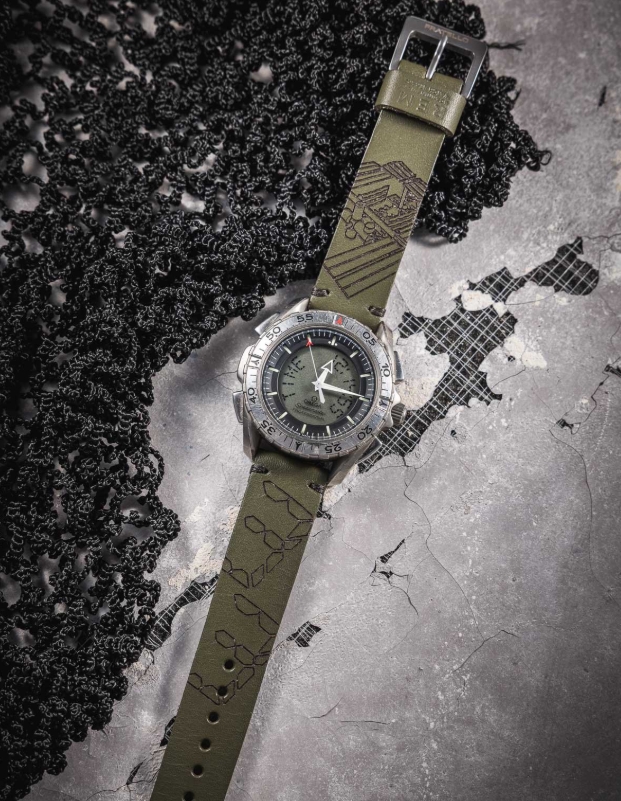
Removing the Skywalker and Marstimer from the public catalogue does not make every X33 rare, nor does it prove that Omega has abandoned the concept. The model has already lived two separate lives: one as a retail watch and another as professional equipment issued or supplied outside ordinary shops. Earlier generations continuing to appear with astronauts underline how slowly trusted equipment can change, even when newer products exist.
A future fourth-generation X33 has not been confirmed, so predictions should be treated as speculation. Even so, there is room for a thoughtful successor. A positive LCD could improve contrast, more flexible hand positioning could keep digital information visible, and a carefully limited computer connection could make it easier to prepare schedules or review timing data. The challenge would be adding useful functions without turning the watch into an ordinary smartwatch with a short technological life.
The Marstimer suggests another possible direction: one durable platform adapted for a particular agency, mission or working environment. That seems more faithful to the X33 than filling it with lifestyle features. The appeal of the watch has always come from the sense that every control has a reason to be there.
The same standard is useful when judging a replica. A believable example does not need to pretend it can reproduce every capability of Omega’s original electronic calibre. It needs coherent proportions, a readable display, controls that perform the functions advertised, a comfortable case and specifications that can be checked. For replica Omega watches for UK buyers, that honesty is more valuable than another claim about perfection.
The Speedmaster X33 remains memorable because it solves a different problem from most luxury watches. It puts several kinds of time on the wrist without losing the immediate clarity of analogue hands. The Marstimer extended that idea from Earth to Mars operations, while the earlier generations proved that the basic design could remain useful for decades. Whether Omega eventually returns the X33 to public sale or leaves it as a closed chapter, its lesson is unchanged: on a technical watch, function is part of the design, not an extra line in the description.

